57
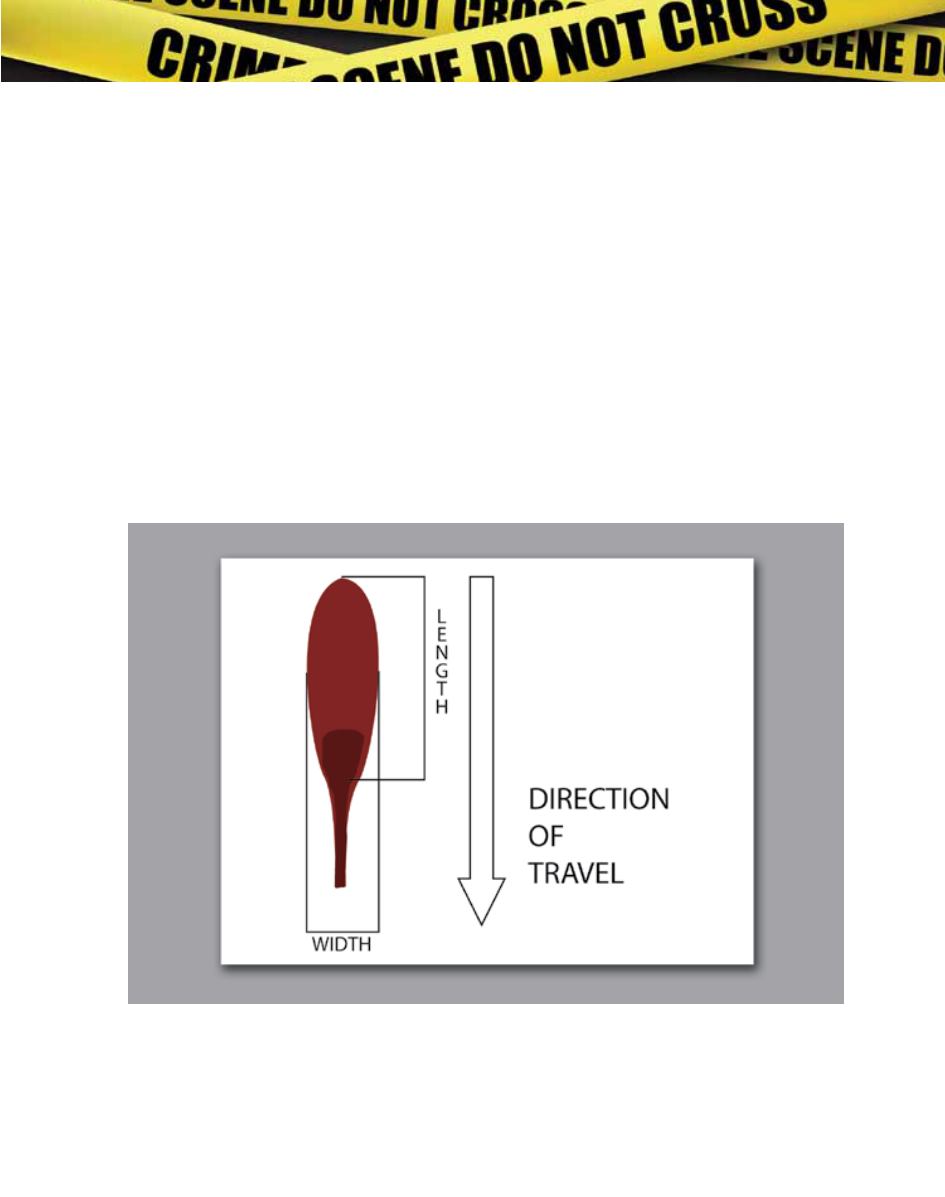
Blood Spatter
Image 3
of the ratio of the width to the length of the droplet can determine the ap-
proximate angle at which the droplet hit the surface. Longer droplets indi-
cate lower angles of impact.
When a moving blood droplet hits a surface it usually splashes forward
(Image 2). The strong surface tension of the blood holds most of the droplet
together, but the energy of the impact can break off small amounts of blood
that splash farther forward. Normally there will be one large parent droplet
and one or more satellite droplets left on the surface. A quick examination
of the location of the parent droplet and the satellite droplets can tell an
investigator from which direction the droplet came. The satellite droplets
always continue along the same line as the direction of travel of the blood.


